What the Drive to Hustai Is Really Like
An honest, stage-by-stage account of the road from Ulaanbaatar to Hustai, the bumpy final approach travelers mention, motion-sickness seating, and what you actually see out the window.
 By Bat-Erdene Ganbaatar, Hustai National Park tour guide and wildlife specialist
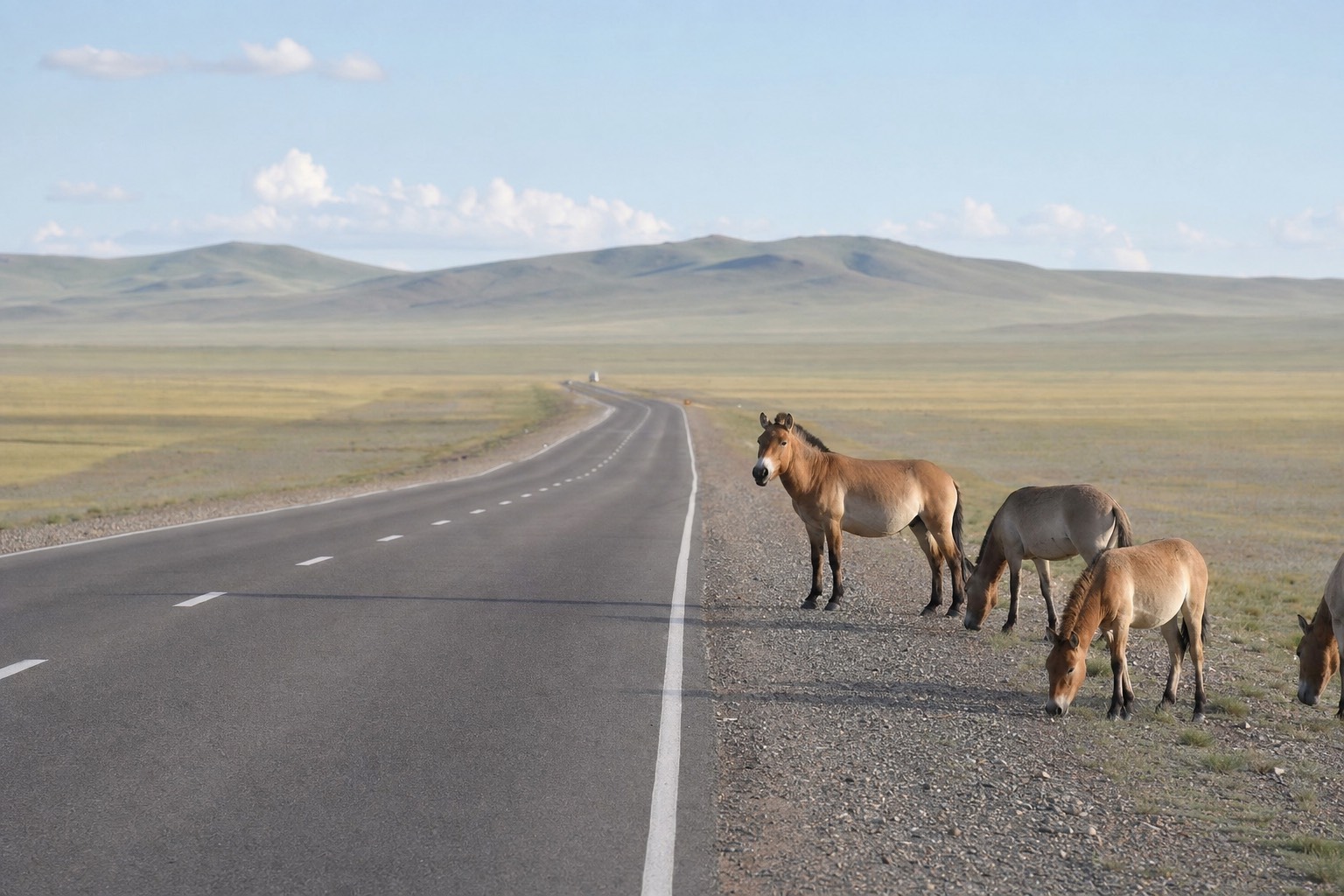
The city thins out faster than you expect. One minute you are stuck behind a bus on Peace Avenue, the next the apartment blocks fall away and there is nothing ahead but grass and a grey ribbon of road pointing west. I have made this drive more times than I can count, and I still watch that moment when Ulaanbaatar lets go and the steppe takes over.
Plan on 1.5 to 2 hours each way for the roughly 100 kilometres between Ulaanbaatar and Hustai. Discover the route without navigating it yourself on a private wildlife day trip that includes pickup, transport, admission and lunch. Explore the private Hustai day trip
Booking Choice: The mostly paved journey and short gravel approach become part of the experience when the transport is already arranged. Discover Hustai on a private 8 to 10-hour visit with pickup, park admission and lunch included. See the private Hustai experience
People ask me two things before we set off: how long, and how rough. The short answers are roughly 1.5 to 2 hours, and mostly smooth with a bumpy last stretch. The longer answer is worth having, because a few reviews mention "bumpy roads and significant distance," and I would rather you know exactly what that means than be surprised by it.
How long does the drive from Ulaanbaatar take?
Plan on 1.5 to 2 hours each way for the roughly 100 kilometres between Ulaanbaatar and Hustai. Most of that runs on a paved highway heading west. Only the final approach to the park entrance drops onto gravel. Traffic getting out of the city is the biggest variable, which is why early departures move faster.
The distance itself is modest by Mongolian standards. The park's own site puts the entrance at 82 kilometres from the capital, while most tour listings and the Hustai National Park overview round it to around 100. Either way it is a half-morning, not an expedition. What stretches the clock is the city. Leaving Ulaanbaatar after 9 am can add twenty or thirty minutes of stop-start before you reach open road, so the operators that pick up early are not being cruel, they are dodging the worst of it.
Once you clear the outskirts the paved highway is genuinely good. The road authority renovated stretches of it, and you can sit at a steady cruise for most of the way. If you want the wider logistics laid out, our guide on how to get to Hustai from Ulaanbaatar covers routes, transfers and self-drive versus guided.
Is the road paved or rough?
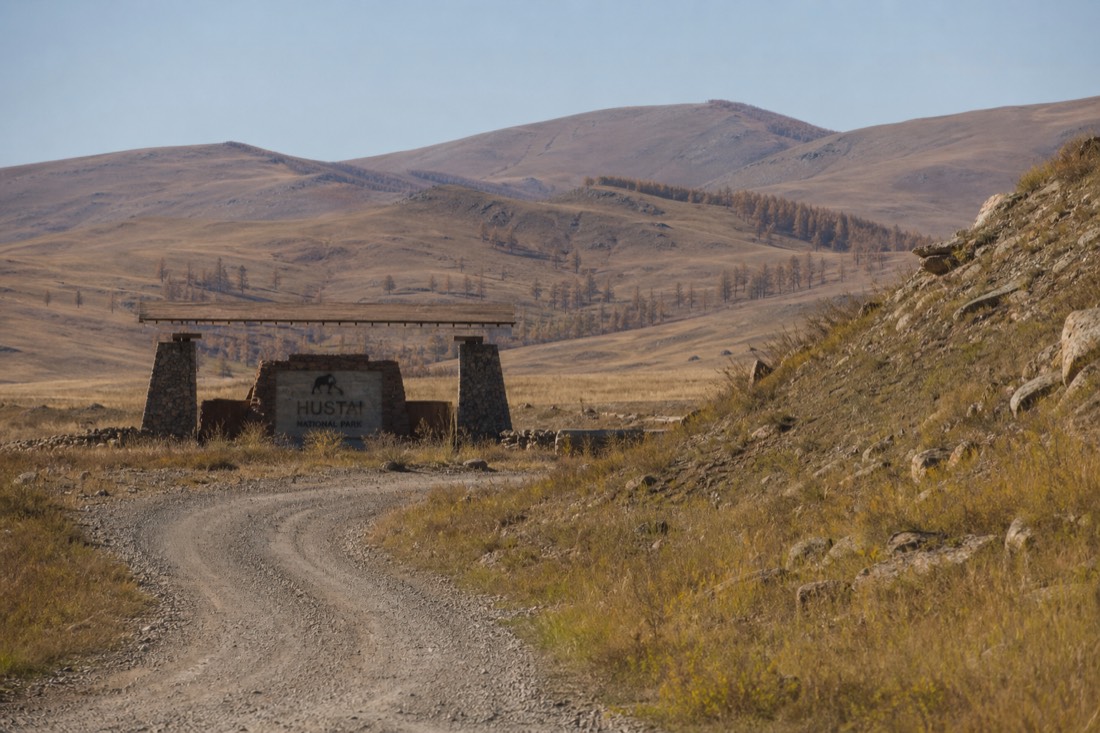
The road is paved for the great majority of the distance and only turns to gravel for a short section near the park entrance. That final approach is the "bumpy" part travelers describe in reviews. It is genuinely uneven and dusty, but it is brief, and inside the park some tracks have been renovated in recent years.
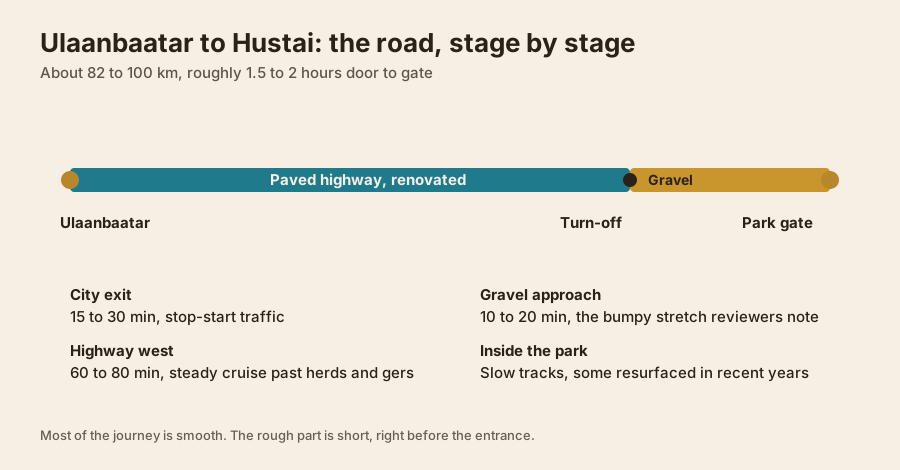
Here is the drive broken into the stages I mentally tick off every trip. The gravel is real, and I never pretend otherwise, but it is a small fraction of the whole.
| Stage | Surface | Rough time | What it feels like |
|---|---|---|---|
| Ulaanbaatar city exit | Paved, busy | 15 to 30 min | Stop-start traffic, the slow part |
| Main highway west | Paved, renovated | 60 to 80 min | Steady cruise, open steppe both sides |
| Turn-off toward the park | Paved to gravel | 10 to 15 min | Surface changes, pace drops |
| Final gravel approach | Gravel, dusty | 10 to 20 min | The bumpy, washboard stretch reviewers mention |
| Inside the park | Mixed paved and dirt tracks | Varies | Slow, deliberate wildlife driving |
That "significant distance" line in the reviews is fair in the sense that Mongolia is a big country and everything feels far. In practice, as a day trip from the capital, this is one of the shorter and easier drives you can take. Terelj, the other classic day out, is a comparable haul, and our Hustai versus Terelj comparison weighs the two if you are deciding between them.
What do you see out the window?
You watch Mongolia open up. Past the city edge the land flattens into rolling steppe, and within half an hour you are among grazing herds, the odd horseman, and the round white gers of herding families. Late spring and summer bring green hills and livestock everywhere. It is a slow, quiet unspooling of the countryside rather than dramatic scenery.
This is my favourite part of the job to describe, because the drive is not dead time. It is the country introducing itself. You will pass herds of sheep and goats moving like slow tides across the grass, cattle and yaks near the water, and horses, always horses. Mongolia's countryside runs on them.
The gers give the window its rhythm. A cluster of two or three, a motorbike leaned against one, a solar panel, a satellite dish, smoke from a stovepipe. In warm months families are out with their animals, and the whole scene tells you why this landscape shaped a nomadic culture. The official park site frames Hustai as the meeting of that pastoral world and a serious conservation project, and the drive is where you feel the first half of that.
You are also crossing land that funnels tourism into the country. Mongolia recorded around 846,000 foreign arrivals in 2025, a record, and yet the road west still feels empty once the city is behind you. That contrast, a booming visitor year and an open, quiet steppe, is part of the appeal.
How do I avoid motion sickness on the way?
Sit in the front passenger seat if you can, keep your eyes on the horizon rather than a phone, and save the gravel approach for a moment when you are settled, not mid-snack. The paved highway rarely troubles anyone. It is the short washboard section near the gate that catches people out, so time any queasiness management around that.
Motion sickness on this route is nearly always about the last stretch and about looking down. On smooth highway you can read or doze without trouble. The moment the surface turns to gravel, put the screen away and pick a fixed point ahead. Front seats sway least, so if someone in your group is sensitive, give them the front.
The vehicle matters too, and the two featured tours differ here. A private car rides differently from a shared van, and both differ from the sturdier vehicles some operators use for the park tracks.
| Vehicle type | Ride on highway | Ride on gravel | Best for |
|---|---|---|---|
| Private sedan or SUV | Smooth, quiet | Firm but manageable | Small groups wanting a flexible pace |
| Shared minivan | Comfortable, can be full | Bouncier at the back | Budget travelers on the group departure |
| Higher-clearance 4x4 | Firmer, taller | Best over washboard and park tracks | Anyone prone to motion sickness on rough ground |
If you would rather not think about any of this, the simplest fix is to let the driving be someone else's problem.
What are my timing options for the day?
A dawn start may offer quieter roads and early light, but it means a very early alarm and does not guarantee a takhi sighting. A standard mid-morning departure, around the 9 am group pickup, is easier on sleep and still delivers a full day. A two-day nomadic-family homestay avoids fitting both road legs and the park visit into one day, but it is not a stay at a named tourist ger camp and does not guarantee dawn wildlife viewing.
The trade-off is simple: the earlier you go, the better the wildlife light and the thinner the traffic, at the cost of your morning. Here is how the main options compare.
| Timing option | Leave UB | Trade-off |
|---|---|---|
| Self-arranged dawn departure | 5 to 6 am | Best light and empty roads, hardest wake-up |
| Standard group day | 9 am pickup | Balanced, easy logistics, arrives after peak light |
| Overnight at a park ger camp | Afternoon | Removes drive pressure, adds cost and a night away |
Whichever you pick, the drive is the same road: mostly smooth, briefly bumpy, and quietly beautiful the whole way. If you want to plan the hours on the ground once you arrive, one day in Hustai maps out a realistic itinerary.
Common questions about the drive to Hustai
Is the road to Hustai fully paved? Almost. The highway west from Ulaanbaatar is paved and renovated for most of the distance. Only a short section near the park entrance is gravel, and that is the bumpy part travelers mention.
How far is Hustai from Ulaanbaatar? The park's own figure is about 82 kilometres to the entrance, while tour listings often round it to 95 or 100. Drive time is 1.5 to 2 hours depending on city traffic.
Will I get carsick? Most people are fine on the paved highway. If you are sensitive, sit up front, watch the horizon, and put your phone away for the short gravel approach near the gate.
Can I do it as a day trip and get back the same day? Yes. This is a standard day trip from Ulaanbaatar. Both featured departures return you to the city the same evening.
Is a 4x4 necessary? Not for the drive itself, which any car handles. Higher-clearance vehicles ride better over the gravel and the park's dirt tracks, which is why some operators use them.
The road to Hustai is not the ordeal a couple of reviews make it sound. It is a smooth run west with a rough final kilometre or two, and a window full of the Mongolia you came to see.
Choose Your Next Step
Private Hustai Wildlife Day
Have your travel date in mind? Check Private Hustai Wildlife Day before arranging the rest of your trip.
8 to 10 hours. Private transport, lunch and park admission; pickup offered from Ulaanbaatar. English, French, Korean or Russian. Wildlife and a dawn departure are not guaranteed. Not wheelchair accessible; not recommended during pregnancy.
Compare Trip Styles And Adjust Your Choice
- Six-Hour Hustai Day: About 6 hours. Downtown Ulaanbaatar hotel transfers, local lunch, entrance and an English- or Mongolian-speaking guide. Not suitable for mobility impairments. Sightings are not guaranteed. Arrange your own travel insurance.
- Two-Day Hustai And Nomadic Homestay: Two days with a private ger at a nomadic family, meals and Ulaanbaatar hotel pickup. English guiding. This is not either named Hustai tourist camp. Riding and the cultural show cost extra. Not wheelchair accessible.
This is trip guidance, not an eligibility or availability confirmation. Check the operator's restrictions for everyone travelling.
Choose a date to inspect the Viator departure schedule. Final availability and price are confirmed on Viator.